Not the time to Skimp
By
Nick Fugate
 
If you live anywhere in the
country where snow falls then you know it is about time to take your boat out of
the water. What does that mean? Well it means that it is time to protect your
investment and WINTERIZE.
The most important thing to
winterize on the boat is the engine. The last thing you want to happen is to
have a cracked engine block. Think about it, it is much less expensive and less
time consuming to winterize your engine now than to have to rebuild or replace a
cracked block in the spring. You will want to use marine grade, -100, blue
antifreeze to do the job correctly. Though the temperature may never go below
-20 F you still want to use the -100 antifreeze. Over the winter antifreeze may
dilute and become less effective. We at Crowley’s only use the -100 when
winterizing engines. We take no chances with your engine.
See
the link below for information on how to winterize your
engine.
Next it is time to winterize your
water systems. Be sure to use marine grade, -50, pink antifreeze. We recommend
purchasing marine grade antifreeze instead of the cheap RV antifreeze for a
couple of reasons. For one, the RV antifreeze does not have any rust inhibitors
in it. Also, many manufactures or bottlers of the RV antifreeze will add some
water to the mixture therefore diluting and making it less effective. At times
they may also be bottling reclaimed or used antifreeze which makes the product
less effective.
See
the link below for information on how to winterize your water
systems.
One more tidbit of information;
the -50, pink antifreeze is usually made with Propelyene Glycol which is
non-toxic and has a higher freezing point. The -100 Blue is usually made with
Ethylene Glycol which is toxic, but has a lower freezing point and therefore
offers extended protection. Our -50 and -100 are made with Propelyene Glycol
making them non-toxic. You can even winterize while still in the water. Take the
time and winterize.
|

Tuesday, October 27
Not the Time to Skimp


Wednesday, September 16
Interviewing a Sailor “Charlie Hohmier” Transpac 2015
|
Interviewing a Sailor “Charlie
Hohmier” Transpac 2015
By: Nick
Fugate
1) When did you start
sailing?
I
had a late start, I was 25 years old. I learned the mechanics of a big boat
before I understood anything about sailing. In my early days of sailing I
crewed a bit on Heritage (the reinforced America’s Cup boat). I was always
amazed at the scale of big boats.
2) How did you get involved
with Bretwalda?
It
started a long time ago when I sailed on a boat named J-Sen. That’s when I met
the present owner of Bretwalda. Through the years, we’ve stayed friends and
continued to do some sailing together. Recently, he started campaigning
Bretwalda and I was happy to help.
3) What is your position on
the boat? Does it change at times?
Officially, I was the navigator
and pit man on this race. Especially on a long race, it changes often. There
were times I was at every position. Actually, foredeck was the one position
that I didn’t fill - which must be a sign of my age! There are also the
logistic support tasks – making water, making dinner, and checking that we
didn’t pick up any debris on the rudder or keel.
4) How do you prepare for a
Long Distance
Offshore
regatta?
For
this race, some performance predictions started six months ago. Those results
led to sail selection for Bretwalda. As navigator, I started paying attention
to weather for this race a month before the race. At that time, I was
familiarizing myself with the “normal” weather patterns on the course. As the
race time got close, more and more time was spent predicting what weather we
might experience.
5) Is this any different
than a buoy race regatta?
In
general, there are fewer turns and more meals.
6) What do you normally
bring with you?
Over the years, I have pared down
the items in my sail bag to keep light, but not compromise function. The
available gear has gotten better. For example, rather than boots, I use a good
pair of “smart” socks under a pair of water proof socks in addition to my
sailing shoes. It works great and is much lighter. But I’m not on the
foredeck. I have seen race web sites (Bermuda) that include detailed
information on what should be packed. It is a great check. A few go-to items
that I include, such as baby wipes and safety gear, have been included in
Bretwalda’s inventory.
7) Does the skipper limit
the amount of gear you are allowed to bring?
Not
officially. Every crew member is a willing participant in the weight game.
Weight is so important that it is understood our sea bags contain only what we
need – and a GoPro.
8) What was the scariest
position you have ever ended up in?
Sailing on a
T-10?
9) Have you ever been afraid
for your life?
I’ve learned to trust the boats I
sail on and the crew I sail with. Knowing that you are on a proper yacht with
crew you can count on lessens your fear.
10) Was there any fear going
into this race?
Yes, but not so much for my
life. There was more fear of not performing as well as I would
like.
There was a Cyclone in the area
of the race which caused a good amount of consternation. I was keeping close to
some great weather resources which helped alleviate my fears of that forecast.
It was my job to keep us out of trouble.
11) What do you enjoy more
Ocean sailing or Lake sailing?
Yes. Actually, if I think about
it, fresh water is a great luxury. Salt never goes away.
12) How’s the after
party?
We
finished and then had to wait 8 hours before we could go into the harbor. A
gale in Tasmania caused surf that was dangerous to entering boats. That caused
some disappointment.
When we did get on shore, our
assigned welcome team was waiting with breakfast and rum. They make themselves
available for providing the welcome food and drink no matter what time you
finish. That was a great little party. Twenty three
hours after that, I was in the airport headed home. It was a slow race so the
scheduled down time after the race was cut short. It only gave me time for
drinks by the pool, dinner and a nap. Because the race is so long, the official
party was days after our finish. That gave the little boats time to get there.
Unfortunately I don’t know how the party was!
|
Thursday, August 20
Carburetors vs. Fuel Injection
Carburetors vs. Fuel
Injection
By:
Nick Fugate
Carburetors have been used on engines since 1882 when
Enrico Bernardi developed one for his one cylinder prototype engine. The
carburetor is the oldest method of air fuel induction. The correct mixture of
gas and air results in a smooth running engine. This can be a tricky process
considering each engines preference for fuel. This is where the specifics of the
parts come into play.
Carburetors contain a venturi, a throttle, a metering
rod or fuel tube, a float chamber, and a choke. The flow of air through the
venturi causes a pressure drop which pulls fuel through the metering rods and
into the air stream. The flow of fuel is controlled by the pressure and the
nozzle on the rod along with the atmospheric pressure in the float chamber. The
volume of the pressure drop then controls the operation of the engine, which
responds to the position of the throttle.
The choke controls how much air flows through the
carburetor. When the choke is closed, the amount of airflow is limited causing a
fuel-rich mixture to flow into the engine cylinders. This process is needed when
starting a cold engine.

Carburetors
were regularly used until the mid 1980’s when fuel injection was introduced.
Fuel injection offers better fuel economy and a broader power curve. A fuel
injector is nothing more then an electronically controlled valve. It is supplied
with pressurized fuel by the fuel pump and is capable of opening and closing
many times per second. When the injector is energized an electromagnet moves a
plunger that opens the valve and allows the pressurized fuel to squirt out
through a tiny nozzle. This atomized fuel improves combustion. The finer the
mist the more easily the fuel burns. The injectors are mounted in the intake
manifolds so that they spray fuel directly at the intake valves. The fuel rail
supplies pressurized fuel to all of the injectors. There are three basic types
of fuel injection; throttle body, multi-port (batch fire), and sequential system
(fires one at a time).
When purchasing a new boat be sure to inspect the engine
and see what system is being used in the boat. With the pros and cons of each
system one must decide which is more economical for their purpose.
Monday, June 22
11th Hour - A Special Note from Dave Rearick
Hello
Everyone!
Many of you know me from years of
sailing on Geronimo, the SR 33 in the Mac races on the Great Lakes and others of
you remember me from my adventures on Bodacious Dream, the Class 40 racing and
sailing solo around the world.
These past couple of years, I
have been honored to be an Ambassador for 11th Hour Racing, a program of the
Schmidt Family Foundation who seek to promote good environmental practices and
stewardship of our waters through the actions of racing
sailors.
Much of the 11th Hour Racing
efforts are directed toward the oceans of the world and I am now able to bring
their thoughts and advice to our precious Great Lakes. Lake Michigan has been
my playground for 57 years now, in these years, I’ve seen a remarkable recovery
by the lake but we’ve also learned the lake is far more fragile than the oceans
of the world. The waters come from rainfall and run off and with a very slow
circulation, different from the twice a day exchange of ocean tides, the lakes
are extremely vulnerable to bad practices. This makes the ideas and efforts of
11th Hour Racing even more important to those of us on the Great
Lakes.
Can
I ask each of you to consider these thoughts, and do your best to try them out
for the Mac Races?
1.
Please try to eliminate single
use water bottles. I won’t bore you with why. Our experience at other national
regattas has tallied the number of bottles saved in the tens of thousands.
Imagine a crew of six, each drinking six bottles a day….for a four day Mac
Race—taking into account start and finish days…..This totals up to 120 bottles
per boat….at 300 boats, imagine saving 30,000 some bottles from recycling and
landfills and the 3% blown overboard---This totals over 1000 bottles saved from
Lake Michigan! Even better, buy a camping filtration system for under $100 and
make your own fresh water on the race and use reusable water bottles, saving all
the weight and garbage room! Geronimo has done this for over 20
years.
2.
Consider using alternative
transportation whenever possible. Bikes, skateboards, walking to and from
events. What makes Mackinac Island so beautiful is the lack of motorized
vehicles….I know it doesn’t seem like much….but walking another block or skate
boarding to dinner makes you an outlier! Outliers unite!
3.
We’ve figured out banding our
chutes, with either rubber bands or a yarn isn’t so good. With each spin set, we
pollute the waters. Polyester is plastic and rubber isn’t fish food! New
techniques for lightweight Velcro tabs, zippers and chute scoops are the new
rage on the pro race courses. Imagine how many feet of yarn or rubber bands are
used during a Mac Race…..and how many fish are biting those red bits of
non-nutritious bait!
It’s probably too late this year
to change your ways, but maybe you can find some organic cotton yarn to use
until you can have the sailmaker help you out with reusable Velcro
tabs.
These are some simple steps you
can employ and stand-up, responsible, for the stewardship of your
lake.
I
wish you all good luck in the Mac Race and when you can, take a momentary break
from the racing to enjoy the beauty you are experiencing! I’ve sailed all over
the world and in many beautiful places. From my experiences, a sunset on the
open lake or waking up in the Cathedral of the Lake –the area north of the
Manitou’s, south of Grey’s Reef and bounded on the west by The Islands and the
east by some of the oldest rock on earth— or smelling the fresh pines of the
north country, these are the beautiful treasures we get to experience year after
year by sailing within the respected folds these ancient
waters.
I
look forward to seeing you all on the Island. Look for the 11th Hour Racing
Flag flying from Geronimo and come by to tell me how many disposable water
bottles you saved this year! I’ll proudly take the cumulated number to our next
11th Hour Racing meeting!
Good Luck, sail safe, enjoy the
beauty!
Dave Rearick
11th Hour
Ambassador
Rail meat on Geronimo
50326
Thursday, April 23
My Future's so Bright
By Michael Argyelan

At the beginning of my professional career as a boat captain I was living on the cheap. It was a ‘steak or spaghetti?’ time in my life. A seven to eight month work year meant watching the pennies come in and the dollars going out. Shelling out the dough for a solid pair of sunglasses was never a priority until I went in for an updated prescription for contacts.
At the beginning of my professional career as a boat captain I was living on the cheap. It was a ‘steak or spaghetti?’ time in my life. A seven to eight month work year meant watching the pennies come in and the dollars going out. Shelling out the dough for a solid pair of sunglasses was never a priority until I went in for an updated prescription for contacts.
My
prescription hadn’t changed for over a decade. Lucky for me they were the same,
with one exception; UV damage. The Optometrist asked me what I did for a living.
Being my first year of captaining, I was excited to tell her I was a boat
captain. My answer prompted a quick, “Oh that makes sense.” She asked me what
kind of sunglasses I was wearing. Cheap was my answer.
As
you can imagine the Optometrist told me that if I was going to be on the water
for hours at a time that I needed proper sunglasses to protect my eyes from the
sun’s harmful rays. All I heard was, "If you don’t want to spend a lot of money
in the future, spend it now." So I did that very day. It would be a spaghetti
kind of week.
I
still have that same pair of shades. Well, I have around five pair now but
that’s another story. The difference between high quality sunglasses and the
generic ones are incomparable. The clarity, protection, and the fact that they've lasted over ten years has guaranteed that I’ll never buy a pair of cheap
sunglasses again, ever.
My
first pair was mmm hhmm, a well known name brand. They’re great. I’d buy another
pair. My second pair was a pair of Kaenon’s. Wow, what a difference. The weight,
clarity, and the price were all improvements. Plus they’re pretty cool, so I’m
told.
I
was introduced to the Kaenon brand four years ago when I started managing the
Ship’s Store at Crowley’s and what a great find it has been. I’ve never sold a
pair of Kaenon’s to anyone that hasn't come back to tell me how much they
appreciate me pushing them over the edge to spend the extra few bucks over what
they paid for their cheapies. Quality and styling aren't the only reasons to
appreciate the Kaenon brand, their service and guarantee is
phenomenal.
One
customer had a pair of lenses delaminate. We called Kaenon, sent them in, and a
few days later the customer had brand new lenses. Boom, done, no questions
asked. That’s service.
Here at the Ship’s Store, we have seventy pair of
Kaenon’s in stock. Over a dozen styles with different frame and lens
combinations. We’d like to share our passion for the brand and offer you a deep
discount on any frame of your choice. Here’s the kicker, the discount is lower
than we can advertise it anywhere. Let’s just say you’ll never find a lower
price. If you do, we will beat it.
If
you want more tech info or do some pre shopping online, check out www.kaenon.com.
Please email me at mma@crowleys.com if you have any
questions.
|
Wednesday, April 8
It's About Time
By Michael Argyelan
For you sailboat racers, there’s a new kid on the block,
the new Gill Regatta Race Timer.


For you sailboat racers, there’s a new kid on the block,
the new Gill Regatta Race Timer.
“Featuring the
largest and clearest display on the market today, the new Gill Regatta Race
Timer is all about precision race starts. At 26.5mm, the digital display
is easy to read at a glance in any conditions. Key features include countdown
timer with easy synchronize function, loud audible alerts and key lock
function to prevent accidental input.
|
The case is
constricted using a carbon reinforced ABS plastic with a stainless steel
back. Protected by a tough acrylic face and water resistant to 50m, the
regatta race timer is extremely durable. It comes standard with the option to
attach directly to the boat using its existing quick-release bracket, strap
to the mast or boom, or simply wear it on your wrist.”
|
|
Features:
|
|
“Available in
Yellow and Black colors, this is a great quality timer that no racer
should be without, and is competitively priced at $99.95.”
The timers are
in stock here at
Product info
provided by Gill.
|
Friday, March 20
Tales from Margaritaville
By Greg Gills
Languishing in the used and neglected
part of the lot we found a 1971 Pearson. We didn’t see her for what she was,
only for what she could be. It was an
affordable boat for a school teacher with a stay at home wife and two
children. A $12,000 boat; a boat with
issues. I was staring directly at one of those issues. My issue stared back at
me. It was an enormous split in the
front of a molded keel, like a crooked smile.
It was the summer of 1994 and I was
sitting on a five gallon plastic bucket. The sun was shining, the temperature
was in the low 80’s and I was facing the keel of my new “old” boat. My wife and I had moved up from our Oday 22
to a 33 foot Pearson. “Two foot itus” had morfed into “11 foot itus”.
I knew virtually nothing about boat
repair at that time in my life. I worked
on my own cars, built things around the house, tinkered with my O’day but never
had taken on a project like Margaritaville.
My life was about to change.
From behind I heard the distinct
scuffing sound that shoes make on gravel.
I was, after all, at Crowley
I had always felt I was a very small
fish in the sea of Crowley Crowley
The old girls not done yet, but she’s
close, and a family of friends at Crowley
Greg
Friday, March 13
Happenings
By Michael
Argyelan
It’s going to be above 60 degrees today. The ice on the
southern end of the lake is melting. The sun is shining. Local scholastic
sailors start sailing next weekend. Chicago Yacht Club Frostbite Series starts
March 22nd (details here).
In early to mid April the perch begin to run and the fishing season begins. Yes,
it’s that time of year to really dig in and get ready to go boating! I’m a
little excited. It happens.
One
of the first things we do to get ready to sail is prep the hull with a good wash
and wax. Some of us have newer, shiny hulls that simply need a quick touch up.
Others may have older hulls that need a little more work. Want to know the best
way to revive an older, tired, chalky hull or to maintain that glorious shine?
Come to the aptly named “Care and Maintenance of your Gelcoat Surfaces” seminar
during Yachtapalooza. The seminar begins at 9am and is hosted by John Spies and
Matt Markiewicz (aka Matty) in the Fiberglass Shop. Check out the full
Yachtapalooza Seminar here.
If
you’re new to sailing or have a friend looking to learn, check out Corinthian
Yacht Club’s Crew School. There is very limited space for this course. Check out
the website here.
What: Learn basic to intermediate crewing skills for
Lake Michigan - many opportunities to race or cruise.
Who: 18 years and up
Cost: $140 includes book and materials
When: 5 consecutive Wednesdays 7-9:00pm April 9 - May 21, 2014
Where: Chicago Corinthian Yacht Club 601 W Montrose Drive (east of Lake Shore Drive)
Who: 18 years and up
Cost: $140 includes book and materials
When: 5 consecutive Wednesdays 7-9:00pm April 9 - May 21, 2014
Where: Chicago Corinthian Yacht Club 601 W Montrose Drive (east of Lake Shore Drive)
If
you’re ready to go boating in early May, you really, really should participate
in the Dash to the Dock Race. Well, it’s not much of a race. It’s more of a
rally than a race and it’s a lot of fun.
It’s May 9th and open to all sailing vessels. Motor
vessels are encouraged to join in the fun with a "blackjack run" (a pared down
poker run), accompany the fleet and peel off for informal drag-races with each
other. Don’t forget to join us at the party!
The
party is complete with food and beverages at the Columbia Yacht Club Dock in
Monroe Harbor. Dock space will be available during the party for guests who
would rather complete the trip to their slips on full stomachs. Yacht Clubs in
other harbors have expressed interest in hosting their own parties, so please
check with your closest yacht club for details.
For
more information and to register for what’s going to be fun and relaxing trip to
the harbors, visit http://dashtothedock.com/.
You can also visit the Facebook Page here.
Friday, February 20


We’re Baaaccckk!
By Michael Argyelan
Winter break is over here at Lakeside Story. We are up and
running and writing again. Perfect timing as great things are happening here at
Crowley ’s.
Can you say Stars and Stripes? America ’s
Cup? Abracadabra? Yes ladies and gentlemen, Crowley ’s
is now the winter home of 2 AC (properly referred to as IACC) boats brought to Chicago
by the new program Next Level Sailing. Check out their site here and a quick video of the first
boat to arrive at the yard, Abracadabra, here.
Stars and Stripes pulled in this morning and will be offloaded from the truck
and into building D later today. Just a minute ago the masts rolled in. Very
cool stuff.
Around the yard, mechanics are doing the typical winter gigs
plus doing a complete re-power (changing out engines). That’s a huge job that
requires a high level of expertise. In the fiberglass shop, Crowley ’s
is painting 3 hull sides and two Awlgrip non skid decks. This is on top of the
usual touch ups, repairs, keel works, and other cool gigs.
Ritchie Geoghan (www.ritchiegeoghan.com) is overhauling a Nelson
Marek 68. The project includes a complete re-core of the cabin top, relocating
the companionway, building a custom internal companionway slider, re-coring the
bow, full deck reconfiguration, Awlgrip non-skid deck, hull sides painting,
deck painting, complete interior rebuild, and adding a custom electronic pod in
the cockpit. The scope of the project is incredible. See the post of pics right here on the blog.
With March around the corner, it’s time for Yachtapalooza!
We are pretty psyched about the event this year. New seminars (updated list
coming soon), live music, the Tamale Spaceship is back (http://www.thetamalespaceship.com/), a
preview of the IACC boats, and more. I’ll be updating more about the event each
week including not-to-be missed specials in the Ship’s Store. The event is here
at the yard on Saturday, March, 28th from 8am – 4pm .
Even though it’s pretty frigid out there, it’s starting to
feel like Spring around the yard. The promise of warmer weather ahead has us
fired up and working harder than ever to get boats ready to rock for the
upcoming boating season. Speaking of Spring, check out the updated 2015 Spring
Commissioning Form here.
If you have
any questions about scheduling work, your departure, or your account please
call Customer Service at 773.221.9990 ext 330.
I hope this finds you all well and warm.
Friday, December 12
Real Quick Like
Annual Boat Show Ticket Giveaway Promotion!
Spend $50 or
more in the Ship’s Store and get 2 free tickets to the Chicago Boat, RV &
Strictly Sail Show. This offer is good through Friday, January 9th.
Friday, December 19th Crowley’s employees will be headed
to our annual holiday party at 12 noon and will be out for the rest of the
day.
Wednesday, December 24th we will have limited staff on
hand and close at 3:30pm.
Closed December 25th through December 28th and resume
normal hours the 29th.
Wednesday, December 31st we will close at
3:30.
Closed January 1st through January 4th and resume normal
hours the 5th.
There will be 24 hour security on site during the closed
periods. Please call Customer Service at 773-221-9990 ext. 330 if you plan to
visit while we are closed.
That’s all folks!
Thursday, December 4
Extra! Extra!
By Michael Argyelan
Clogged fuel filters and oil filters, broken belts, failed
impellers; all can change the perfect day on the water into a total nightmare.
If you plan ahead, the nightmare transforms into a mere nuisance. Engine spares,
you want them. You need them. Let us help.
I was working with one of our mechanics and putting together
an engine spare parts kit for one of our customers and he had a great idea,
let’s offer engine spares kits to everyone. I carry spares. Do you? If not, let
us help.
We put together a simple kit consisting of primary and
secondary fuel filters, an oil filter, belt(s), and an impeller. Each part was
put into a watertight zip lock bag to keep moisture out. Ryan, our resident
expert mechanic, took this further and placed the parts in a dry bag. We tagged
the bag with the appropriate and obvious label, “Spare Parts Kit.”
Want us to make one for your boat? Contact me with your
engine information as well as your primary filter info (if applicable) and I’ll
put one together ready for your spring launch. Call me before the end of the
year and I’ll take 10% off your whole order.
When you winterize your boat, use the spares and replace
them to keep the spares fresh. If we winterize your boat, let us know you have
spares on board and we will use and replace them for you. If you have any
questions, please do not hesitate to contact me at mma@crowleys.com.
Stay warm, friends.
Wednesday, November 26
Exchange
By Michael Argyelan
Tomorrow is Thanksgiving, awesome. It’s
one of my favorite days. Pie, turkey, football, friends, family, more pie, inclement
weather and all, I look forward to it each and every year.
Although distanced from the original 1621
celebration of hunting deer and menus completely absent of potatoes and turkey,
the exchange of thanks is still front and center. This year let’s give thanks,
enjoy the warmth of home, welcome even the most stubborn of our relatives, and
be grateful together.
If you find yourself stuck in traffic,
arguing about politics over dinner with your polar opposite cousin, or being
forced to choose from a Jello loaf or a sugarless cake at dessert, remember to
be magnanimous. Be noble, courageous in spirit, and generous. Make others feel
right even when they are wrong. Be larger than life, grateful, and give thanks
to all you encounter this holiday season.
From all of us here at Crowley
Happy Thanksgiving!
Friday, November 21
Notice, Follow Up
By Michael Argyelan
I would be remised if I didn’t remind you all that this
weekend is the Annual Two Day Sale in the Ship’s Store at Crowley ’s.
Everything in the Store, and I do mean everything, is 25% off. If it’s on a
shelf, a hangar, a peg, or sitting on the floor, it’s on sale. This means our
35% off closeout items are now 60% off! We couldn’t stop there. There’s
more.
All in stock Lewmar and SealLine
products will be sold at 10% above cost. Yes, I’m serious. Need a new block? How
about a folding wheel? Need a new winch? Maybe you’re looking for a dry bag?
They’re all on sale at 10% above cost this weekend.
Where? The Ship’s Store at Crowley ’s Yacht Yard, 3434 E. 95th St. , Chicago , IL 60617
When? Saturday, November 22 from 8am – 4pm and Sunday, November 23 from 10am – 4pm
Why? Because we like making money
as much as you like saving it!
Mmmm Mmm Good, continued…
After last week’s column exploring food on boats, I received
a couple of great responses from fellow boaters. As promised, I’ve included
their responses this week (see below). Enjoy and if you want to contribute to
the food on boats theme, please do.
“Ever since Craig Juel brought Joe
Froggers for the 2013 Mac they have been on board for every offshore race Hope
has sailed. For warm food/drink we heat water and keep it hot in a
large thermos which then provides for instant coffee, tea, and most
importantly for me oatmeal with brown sugar and a dram of Scottish whiskey.
For Mac races we bring three crew
meals of frozen stew in individual boiling bags. One is Guinnes beef
(Viks traditional recipe), one either savory pork or turkey (my creation), and
one pasta (Fred's). We've never used more than two on the race.
This system must be working as suggested by our record!
For my ocean crossing in 2016 I'll
bring a dry Virginia or Serrano ham, two dozen freshly laid free
range eggs which I'll keep in the bilge un-refrigerated, potatoes, carrots,
onions, root vegetables, nuts, dried fruit, and for the first few days a couple
of frozen Mac stews. Of course I'll bring limes (to prevent scurvey),
Tonic (to prevent Malaria), and rum (to keep me happy).
When I do solo distance, I don't
drink coffee and only a little alcohol (most of the alcohol
evaporates from my oatmeal). I need lots of protein. I eat no processed
sugar. I take a multivitamin every day. I have plenty of fat stores
on my body, so I don't need to bring any additional on board.”
Michael Leland, MD
Hope USA18
“On
my T-10, Rainbows End, like Mike's crew (on Mischief), I make dinner at home,
freeze it and boil it on the boat during the race. Everything brought
aboard to eat is pre-made at home. I make a jambalaya for Saturday night
and a beef stew for Sunday night. Sandwiches, which we make and store for
lunches, can be switched out for dinners if the sea gets too rough for easy
cooking. The boiled meals are sealed in a vacuum seal bag. One quart bag
gives two servings and the used bags get tossed so there is no cleanup.
The heels and small slices left over for sandwich making are brought aboard to
eat with dinner. We use a hearty craft-baked rye bread. Try Bruno’s,
which Jewel can order.
Breakfast consists of a concoction my wife adopted from an oatmeal cookie- it’s called a breakfast bar. It’s flour, oatmeal, brown sugar, molasses, and raisins all mixed into deliciousness. It eats like breakfast and tastes like a cookie: its no muss, no fuss, and filling. Along with that we have juice or V-8 and hard boiled eggs kept on the frozen water bottles.
Use 8 oz. water bottles- they're small and one serving. I don't like half full bottles rolling around in the cockpit. We drink them and toss them. The crew is allowed 6 of their favorite beverages for the race so that a couple of times a day you have your favorite. For my crew of 6 we freeze 144 bottles and keep one cooler full and taped up under the cockpit for use on those Mondays we find ourselves running low. I also bring a dozen, unfrozen 16 oz water bottles to use in the pot for cooking on the race and on the way back to make coffee or tea.
The snacky parts are filled in with jerky, chocolate cookies, brownies, carrots, celery, peanut butter, small sized candy bars, peanuts, and saltine crackers in the event people might feel sick. We also carry instant coffee for the night watch. Sometimes people have brought instant latte mix and shake them up in the 8oz bottles.”
Breakfast consists of a concoction my wife adopted from an oatmeal cookie- it’s called a breakfast bar. It’s flour, oatmeal, brown sugar, molasses, and raisins all mixed into deliciousness. It eats like breakfast and tastes like a cookie: its no muss, no fuss, and filling. Along with that we have juice or V-8 and hard boiled eggs kept on the frozen water bottles.
Use 8 oz. water bottles- they're small and one serving. I don't like half full bottles rolling around in the cockpit. We drink them and toss them. The crew is allowed 6 of their favorite beverages for the race so that a couple of times a day you have your favorite. For my crew of 6 we freeze 144 bottles and keep one cooler full and taped up under the cockpit for use on those Mondays we find ourselves running low. I also bring a dozen, unfrozen 16 oz water bottles to use in the pot for cooking on the race and on the way back to make coffee or tea.
The snacky parts are filled in with jerky, chocolate cookies, brownies, carrots, celery, peanut butter, small sized candy bars, peanuts, and saltine crackers in the event people might feel sick. We also carry instant coffee for the night watch. Sometimes people have brought instant latte mix and shake them up in the 8oz bottles.”
Steven J. Fink
Friday, November 14
Mmmm Mmm Good
By Michael Argyelan
Of course if you’re like me and on the Bi-State,
forget it all and bring everything. Bring the pork tenderloin, the grill, extra
beer, all the mixers, extra blankets, pillows, and whatever else makes your
boating adventure more fun for everyone. After all, boating is about fun.
With Thanksgiving creeping up on us in a couple weeks, food
is on my brain. I love Thanksgiving dinner. I go for an extra long run and do an
extra workout the morning of to justify the extra calorie consumption. More
pie? Yes please!
Equal to if not more pleasing than a plate of delicious food
covered in homemade gravy is the people I share it with. Sharing a meal with
friends, family, or crew alike is intensely gratifying. What might be more
gratifying is eating a meal while sailing or sitting on the hook relaxing.
Fellow Crowley ’s
employees/boaters shared their experiences with prepping, storing, and making
food while on board. If you have any food related stories, tips, tricks, etc to
share, please do. I’ll post them in the next newsletter to share with everyone.
For long distance trips or weekends aboard vessels lacking
electric reefers or freezers, there are some common tips to pay heed. Freeze
jugs or bottles of water rather than use bags of ice. Cubes melt considerably
faster than blocks of ice. Columbia Yacht Club sells blocks and half blocks of
ice to its members and racers for this reason. The bonus is your jugs or
bottles melt and you’ll have crisp, refreshing water for consumption. You can
also use a bucket to make your own blocks. Fill it 1/3 of the way up and freeze
it and you have a block of ice.
Another space saving and temperature management practice is
to freeze your larger meals, which is common among long distance cruisers and
racers. A roast or stew is always better the day after. The spices have time to
really soak in. Heating up a chilled cabin with the fragrance of a lovingly
prepared stew is all the more rewarding; especially when you’re on the night
shift, it’s 3am and the temperature is
45 degrees. The taste of that roast is like finding a unicorn having a cocktail
on a rainbow who’s hanging out with the Lucky Charms leprechaun; unbelievable.
Mitch Weisman, cook extraordinaire here at Crowley ’s
goes beyond the usual cold cut sandwiches for his crew. Each Wednesday night
for beer can racing he uses the oven on board to prepare a home cooked meal. He
will frequently prepare chicken legs, but sometimes he goes all out and
splurges on a small pork or beef roast. The key is to prep the meal at home and
then right before leaving the dock pop it into a preheated oven. According to
Mitch, “Sometime before the second leg, things will start to smell good.” I’ll
never forget the first time I heard Mitch announce on the race committee VHF channel,
“If you smell something good, it’s Snafu.” I laughed all the way to the second
mark.
For the Mac race, Mitch will often cook a ham. Once cooked,
you can make sandwiches; use it in eggs for extra protein, or however one sees
fit. When he had a fridge on his last boat Snafu, he had leftovers for the trip
back home. The other Mitch-Mac tip is using frozen pizzas.
As the fleet moves farther north during the Mac night time
temps drop quickly and warming up the cabin is always a great idea. Plus, who
doesn’t want pizza in the middle of a long distance race? Mitch added that at
least one person skips the pizza just to stay in their warm and cozy bunk.
Dan Bochnovic suggests that if you’re going longer distances
and don’t mind the extra weight, be elaborate. Why not, right? Get everyone in
the crew involved whether that means having a cooking party at home to prepare
and freeze for later or bringing fresh ingredients with to make from scratch on
board. Boats, food, friends, getting involved; what’s not to like?
Resident T10 addict Mike Travis prepares (or should I say
consumes) stews and casseroles; staples on Mischief. Meals are prepared at home
with great care, frozen, and act as ice blocks until ready to heat up on a
gimbaled propane pot. They simply add a little water to steam the bag and serve
up piping hot meals to the ravenous crew. An example of these magical
boil/steam bags can be found here. http://www.packitgourmet.com/CookIn-Bags.html
Protein is often necessary for athletic racers and can be
difficult to come by if trying to save weight or space in the reefer. Mike and
a few other long distance boaters recommend hard boiled eggs. They are easy to
store in their carton, retain their temperature well, and have great protein
levels. Other protein sources with easy storage are salami and other cured
meats, nuts, and if you’re a protein crazed person, add in a little protein
powder to a bowl of oatmeal.
Speaking of oatmeal, it’s one the easiest, lightest, most
powerful sources of energy on the boat. Of course this takes fuel to heat up
but a hot meal early in the morning is wonderful. Skip the protein bar and
treat yourself and your crew to a hot meal. Other great ways to save weight and
space are to carry powdered drinks like Gatorade rather than a bunch of packaged
bottles, instant coffee such as Via by Starbucks (it’s not that bad), trail mix with extra M&Ms, and any other candy you can
fit. If you’re a coffee lover but typically drink fancy mocha type drinks, brew
your coffee and then add in a package of hot chocolate. It’s a poor mans mocha.
It’s also delicious.
Another great tip is to keep ginger products on board. You
never know when a new guest will start feeling a little queasy. A sip or two of
ginger ale will do the trick. Bruce Rosenzweig of Sailboat Sales keeps ginger
snap cookies on board for this very reason. Mike Travis does as well. I
typically keep ginger ale on board because it also mixes exceptionally well
with bourbon and rum!
Andrew Spaulding shared some lesser known tricks. If you
want to bring fruits and vegetables on your cruise or long distance race wash
them in a sanitizing solution to kill surface bacteria, which contributes to
rotting. Use approximately 1 teaspoon of bleach to a gallon of water for a
homemade solution. Use a measuring teaspoon, not the one you eat cereal with,
folks. Your fruits and veggies will last longer in or out of the fridge.
If you want to bring fresh eggs, try going to a farmer or
farmer’s market to purchase eggs with a fresh bloom on them. The natural
coating keeps eggs fresh out of the fridge. Most other countries don’t
refrigerate their eggs and this is why. You can coat them with Vaseline and
they will last for months, not that many of us will be at sea that long, but
it’s a pretty cool trick. If you do, flip the eggs over ever week or so to keep
the yolk from settling on the bottom.
Another tip from Andrew is to never bring food boxes, aka
cardboard, on the boat. This is especially true in tropical and sub-tropical
climates as roaches lay eggs in cardboard! Many Caribbean
cruisers and global cruisers are very aware of this age old trick. It’s not a
bad practice here in the northern climates either as it saves space, weight, and
you’ll have less garbage on board after consuming the contents.
Some of you may be asking, what about booze? I get that. I
do. I’ve learned to enjoy sipping bourbon, whiskey, or rum and to just add a
bit of ice. Who needs a mixer? If you’re a vodka consumer, a small bottle of
Vermouth and a few olives are lighter and take up less room than soda water or
other mixer. Some racers will even ditch the bottles and use plastic hanging
bags. They won’t crack open in waves, save weight, and as the levels get lower
and lower you can compress the air out for space savings.
Saturday, November 1
We're Gonna Need a Montage
By Michael Argyelan
Title inspiration here.


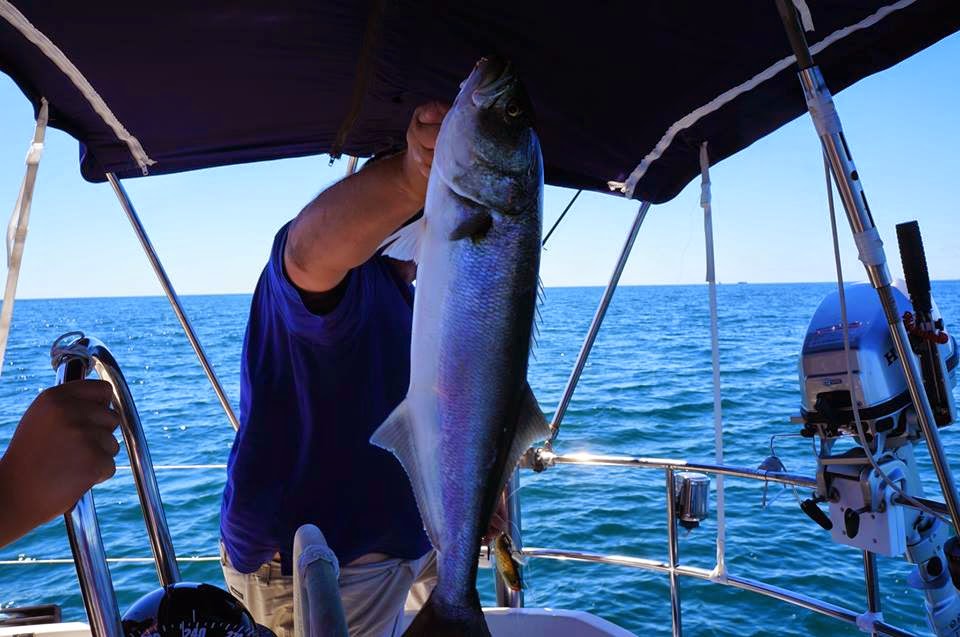


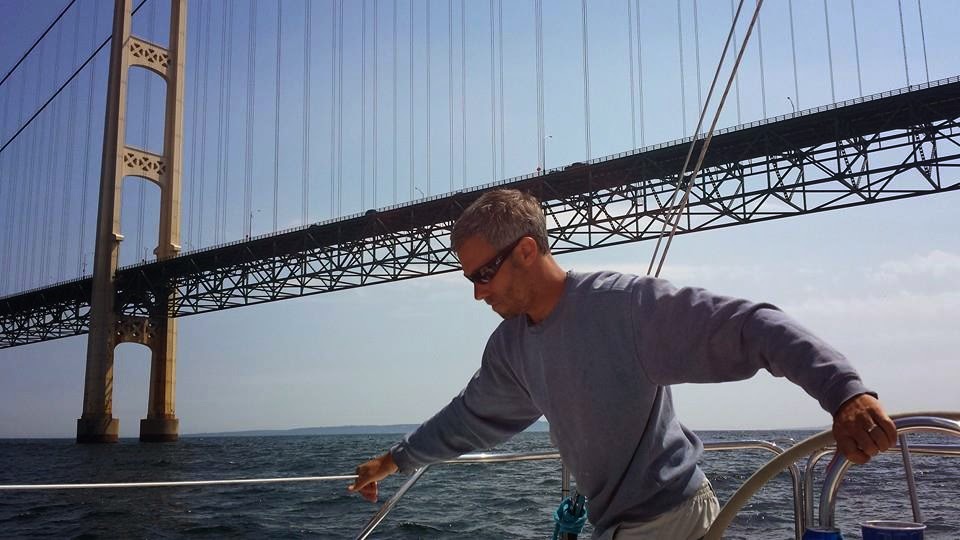


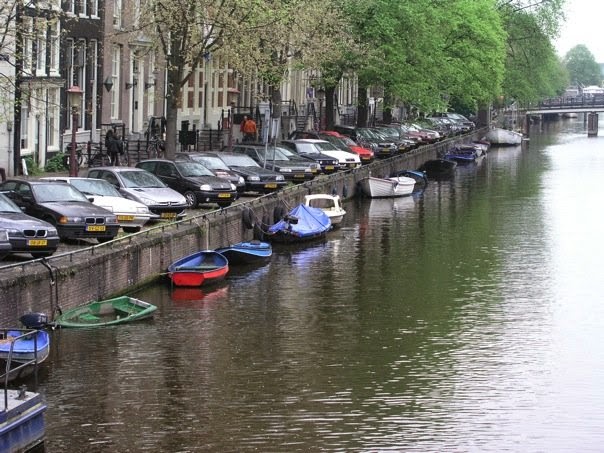


It’s over, final, fin; the Chicago
boating season for 99% of us is complete. Upon coming to this harsh reality, I
reached out to friends and friends of friends via social media interwebs and
garnered images to wrap up the season. The response from the community was
fantastic.
I collected so much more than images. What I found is all of
us share the same desires and habits. Our love of the water brings us together
whether we sail, fish, swim, paddle board, or fly a kite on the beaches. Of
course, it seems rum and beers bring us together pretty well too. After sifting through the images, it’s obvious that whether we know each other through
personal experience or not, we know each other through the love of boating and
the water.
I want to send out a huge
thank you to everyone that participated and gave me permission to use their
photos. You’re the best and I’m proud to be a part of the Chicago
boating community.
Achtung! Neither Crowley ’s
Yacht Yard nor I own these photos and were given permission to use them for
this purpose only. Please do not copy or use for any purpose other than viewing
in our blog. Thank you for your cooperation and understanding.
Photo Credit, David Travis
Photo Credit, David Travis
Photo Credit, David Travis
Photo Credit, David Travis

Photo Credit, David Travis

Subscribe to:
Posts (Atom)